Fortnite sprite farming vs bounty hunting in Fortnitemares 2026 and which route wins for a 100+ sprite run
You can order the same kind of articles for your own video to boost it on YouTube and Google. Just message the Telegram bot @sat_sit_bot. It writes articles around your video, embeds the video and publishes them on popular niche websites (no ads). Try it free: 50 articles on us.
· based on the channel TG Plays
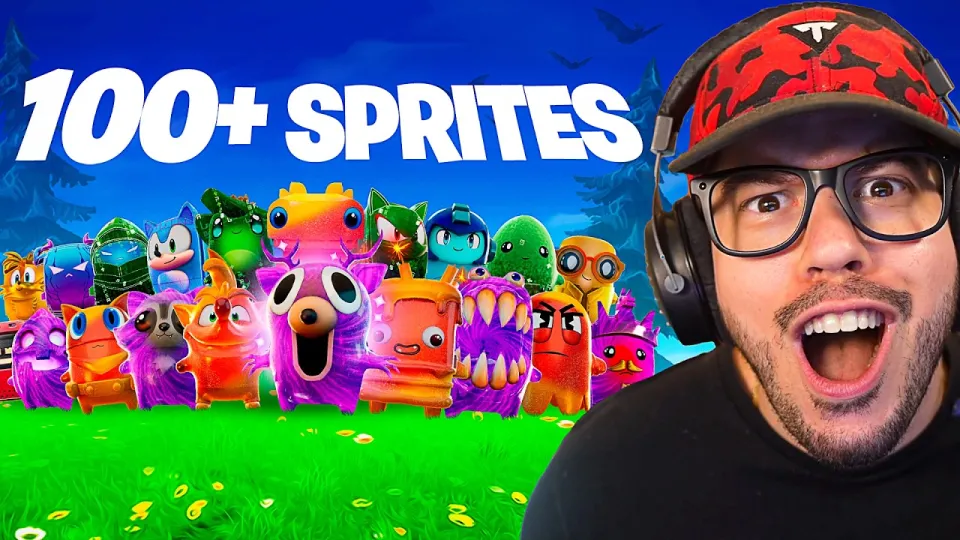
Fortnite sprite hunting during Fortnitemares 2026 is best played as a route problem rather than a combat problem: pick a bounty-hunter-heavy loop, stack movement items, and clear sprites in short bursts before the storm forces a rotation. That is the approach behind TG Plays' two-hour power hour, which targets 100+ sprites in a single session — and you can follow the creator's own map drops and updates through his Fortnite creator profile.
What a Fortnite sprite power hour actually is
A power hour is a self-imposed time limit: one session, one goal, no side quests. In the Fortnitemares 2026 version the goal is a sprite count, and everything else — eliminations, loot rarity, quests — is secondary. The format works because it forces decisions: every minute spent fighting is a minute not spent collecting.
The practical rules most players adopt look like this:
- Set a hard timer (60 or 120 minutes) and count sprites at the end, not during.
- Play the mode where sprites spawn most densely and respawn fastest.
- Skip fights you cannot win in under ten seconds.
- Keep one inventory slot free for movement or healing so a bad rotation never ends the run.
- Screenshot the final count — the number is the whole point of the format.
TG Plays frames the challenge as a bounty hunter sprite run, which is a meaningful distinction: bounty hunter sprites reward active hunting, so the session becomes a chain of short engagements instead of a slow chest-by-chest sweep.
Why bounty hunter sprites beat passive looting
Bounty hunter sprites are the efficient target because they concentrate the grind into repeatable encounters rather than random spawn luck. Passive looting depends on chest density and other players leaving things behind; hunting depends on your route and your speed, both of which you control.
The trade-off is risk. A hunting loop pulls you toward other players and toward the map edges where spawns are thinner but contested less. In a two-hour session the math is simple: ten quick sprite pickups beat one long fight over a single rare drop, and the player who treats every engagement as optional finishes with a higher count.
The route that makes 100+ sprites realistic
A realistic 100+ sprite session is built from three repeating segments, not one giant lap. Segment one is a dense named location where you clear sprites fast and leave before the crowd arrives. Segment two is the connective tissue — roads, fields and small POIs between hotspots, where you pick up stragglers while rotating. Segment three is the safe reset: a quiet corner where you heal, restock and re-enter the loop.
Useful habits for each segment:
- Land slightly off the main building of a hotspot so you are not sharing the first thirty seconds with three other players.
- Rotate on the storm's schedule, not yours — leave a location when the circle pulls you, not when it feels empty.
- Bank sprites at natural breaks; a run that ends in the storm still counts if you have already logged the good half.
- Re-check popular Halloween POIs late in the session, when the lobby has thinned and spawns are less contested.
Commenters on the video repeatedly suggest Golden Grove as an underrated sprite spot, and the logic holds: a location with steady foot traffic and multiple buildings gives you repeated pickup chances without forcing a single crowded drop.
Movement, fall damage and storm discipline
Movement is the stat that decides a collection run, and Fortnite punishes sloppy movement harder than sloppy aim. Sprinting, sliding, rifts, launch pads and vehicles all convert directly into sprite count; a player who crosses the map twice as fast sees roughly twice the spawn opportunities.
Fall damage deserves its own rule. Long sessions create overconfidence — building high for a vantage point, dropping off a cliff to save five seconds, taking a fight on a rooftop. One bad fall ends two hours of work, so treat every height as a cost. The same applies to the storm: a single tick is trivial, but a run built on "just one more pickup" outside the circle bleeds health you will need later.
A short checklist before every rotation:
- Full shield or a healing item in hand.
- A known exit — a vehicle, a rift or a clear downhill path.
- Enough time on the storm timer to reach the next hotspot comfortably.
- No engagement you cannot break off in one magazine.
Common questions from the sprite grind
Long farming sessions generate the same doubts every time, and most of them come down to pacing. Players ask whether a run should be played in Zero Build for an extra challenge — it can be, but removing building also removes quick vertical escapes, which changes your route more than your sprite count. Others wonder how a creator survives two hours without dying to fall damage or the storm; the honest answer is that survival is a routing skill, not a luck stat, and the best runs look boring from the outside.
The most repeated question is about the sprites themselves: whether collecting them is worth the time. For event completion and for the power-hour format, yes — the count is the content. For pure competitive practice, a sprite run teaches rotation discipline and map reading, which transfer to normal matches even though the session looks nothing like one.
A few practical answers:
- If you are falling behind pace at the halfway mark, shorten the loop rather than speeding up the rotation.
- If the lobby is aggressive, move to lower-traffic POIs and accept fewer spawns per minute but more minutes survived.
- If you finish early, log the count and stop — padding the session with fights is how good runs turn into bad ones.
Useful links from the run
All of these come from the video description and lead to TG Plays' own channels and maps:
- https://www.fortnite.com/@TypicalGamer — creator profile, custom maps and updates first
- https://www.fortnite.com/@JOGO — the studio behind the built Fortnite games
- https://discord.gg/TypicalGamer — community Discord
- https://twitter.com/TypicalGamer — updates on Twitter
- https://instagram.com/typicalgamer — clips and posts on Instagram
The verdict on two-hour sprite runs
Two hours is the right length for a sprite challenge: long enough that route quality and storm discipline decide the result, short enough that a single mistake does not erase the session. Bounty hunter sprites reward the player who moves constantly and fights selectively, and that is exactly the behavior a timed power hour trains. If you want a benchmark to beat, 100+ sprites in one sitting is a fair target for an experienced player and a stretch goal for a first attempt. The format and the route logic here come from the TG Plays power hour, and if you want to run it yourself, start from the creator profile to grab the maps and updates first.
Key takeaways
- The Fortnitemares 2026 event turns sprite collecting into a timed grind: the target shown in TG Plays' power hour is 100+ sprites in roughly two hours.
- Bounty hunter sprites are the core of the run — hunting them is faster than passively looting chests across the map.
- Powered movement (sprint, slide, rifts and vehicles) matters more than combat skill in a pure collection run.
- Fall damage, storm ticks and overextending into the circle are the three ways a long farming session ends early.
- Your Fortnite profile at fortnite.com/@TypicalGamer is where TG Plays' custom maps and updates appear first.
Source: Finding 100+ Sprites in 2 HOURS! (Fortnitemares 2026) · Markdown version
Questions & answers
How many sprites can you realistically collect in two hours of Fortnitemares 2026?
A focused run with a tight loop and fast rotations can clear 100+ sprites in roughly two hours, which is the target set by the TG Plays power hour. The number depends far more on route efficiency than on combat skill. Players who stop to fight every encounter usually finish well below that mark.
Are bounty hunter sprites better than normal chest looting for a collection run?
Yes, for a timed run. Bounty hunter sprites create repeatable encounters you can plan around, while chest looting depends on spawn luck and on other players leaving loot behind. The trade-off is that hunting pulls you toward contested areas, so you need to be willing to disengage.
What is the biggest risk during a long sprite farming session?
Fall damage and storm ticks end more runs than enemy players do. Overconfidence after an hour of clean rotations leads to high builds, cliff drops and one-more-pickup decisions outside the circle. Keep a healing item ready and treat every height as a cost.
Should you play a sprite power hour in Zero Build?
It works as an extra challenge, but it changes your routing more than your sprite count. Without building you lose fast vertical escapes, so you need vehicles, rifts or clear downhill paths planned in advance. Try it after you have a normal run benchmark to compare against.